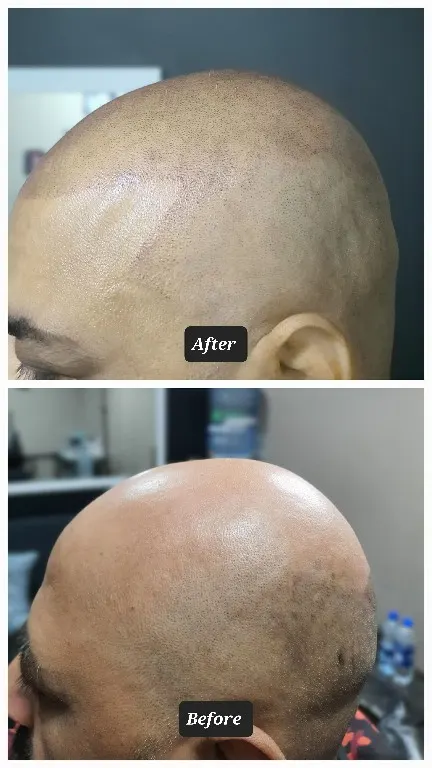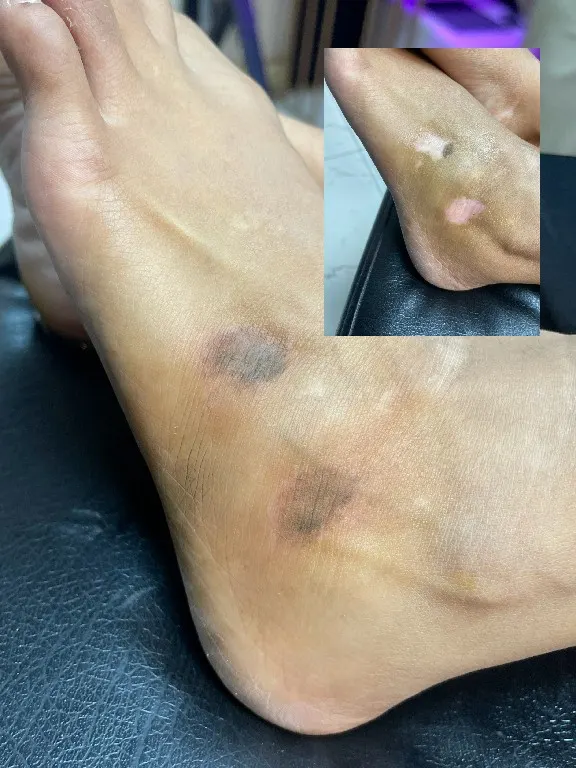
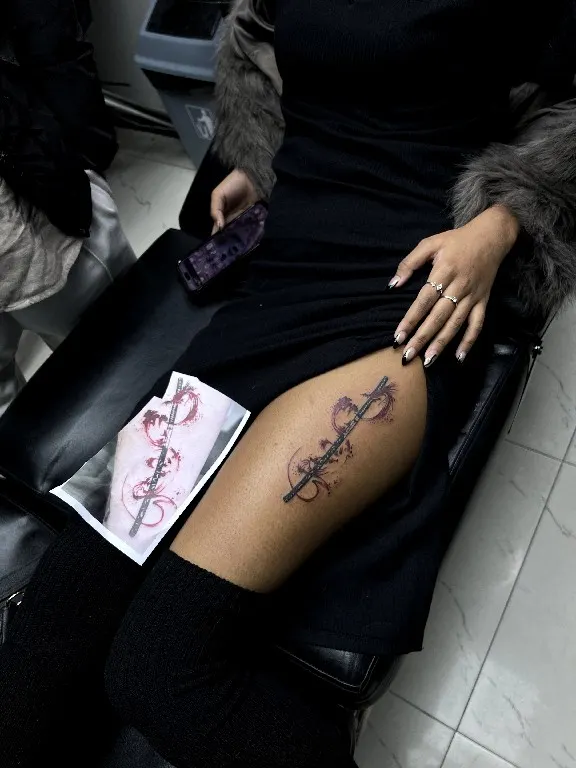
A scar cover-up keeps the scar but changes what your eye lands on first. The scar stays part of the skin, and a well-designed tattoo over it gives you something better to look at. Done well, the scar stops being the first thing you see.
It's also one of the few tattoo jobs where an artist should talk you out of things. Not every scar can be hidden, and not every design suits every scar. Understanding that before you book is what makes the difference.
01 — The idea behind cover-up work.
Scar tissue takes ink differently than normal skin. It can be harder to penetrate evenly, and the ink can sit differently depending on how raised, textured, or pale the scar is. That's why the approach matters more than the design.
Two honest points from the start:
- Cover-up usually needs more ink and often more than one session than a regular tattoo
- Flat, pale, fully-healed scars take ink far better than raised or recent ones
02 — What a scar needs before ink.
Age matters. A scar that's still settling, whether pink, raised, or less than a year old, can change shape as it matures, which would distort the tattoo over it. The artist needs the scar to have finished settling first.
It also needs to be in decent health: not actively red, not itchy, not breaking down. If you're unsure, that's a consultation question. The artist will tell you whether your scar is ready or whether it's worth waiting a few more months.
03 — Designing over the scar.
The design has to do two jobs at once: work as a tattoo, and break up the scar's outline so it doesn't read as a scar at a glance. Solid, darker areas with texture handle this better than fine, open linework.
Good cover-up designs tend to use:
- Darker shading and blackwork that overpowers the scar's colour difference
- Movement — flowing shapes, feathers, waves, foliage — that pulls the eye across the scar
- Enough size to wrap the scar completely; a design that's too small just frames it
Your artist will sketch over photos or directly on the skin so you can see exactly how the design relates to the scar before committing.
04 — What to expect from the result.
Most people come in wanting the scar to disappear. The realistic goal is different: the scar becomes part of a tattoo that's worth looking at. Whether it fully hides depends on the scar itself. Raised, thick scar tissue will always have some texture, even under the best work.
That isn't a failure. Most people find the shift in how they see the area is the real change: from a mark they're conscious of to part of a piece they chose.
05 — Booking a consultation.
Send a clear photo of the scar: how old it is, where it is, what it looks like in good light. Add an idea of the direction you're thinking, even if it's vague. The artist can then tell you honestly what's possible before you commit to anything.
Cover-up work is worth getting right. A consultation costs nothing and answers the questions that decide the result.