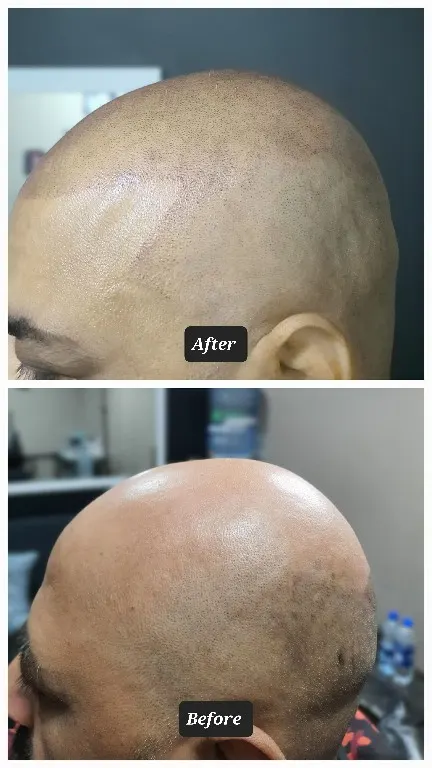
Scalp micropigmentation, usually shortened to SMP, is a cosmetic tattoo for the scalp. Tiny dots of pigment are placed in the top layer of skin to mimic the look of shaved hair follicles. Done well, it looks like a deliberate buzz cut, not like a tattoo.
It's used two ways. Some people shave their head and want the whole scalp to look evenly dense. Others have thinning patches and want the pigment to fill them in, so the scalp looks consistent between the hair that remains.
01 — What SMP actually is.
The principle is the same as a cosmetic tattoo, but the placement is what makes it work. A machine deposits small dots of pigment into the upper layers of the scalp, spaced to look like hair follicles. The pigment is matched to your hair colour and skin tone, so the result reads as stubble or dense hair rather than as ink.
It's not a hair transplant and it won't grow hair. What it does is change how the scalp reads from a normal distance: a shaved head looks full and intentional, and thinning areas look less obvious.
02 — Who it's for.
SMP suits three main situations:
- A shaved head where the scalp looks patchy or lighter in places and you want an even, dense look
- Thinning hair or a receding hairline where you want more visual density without surgery
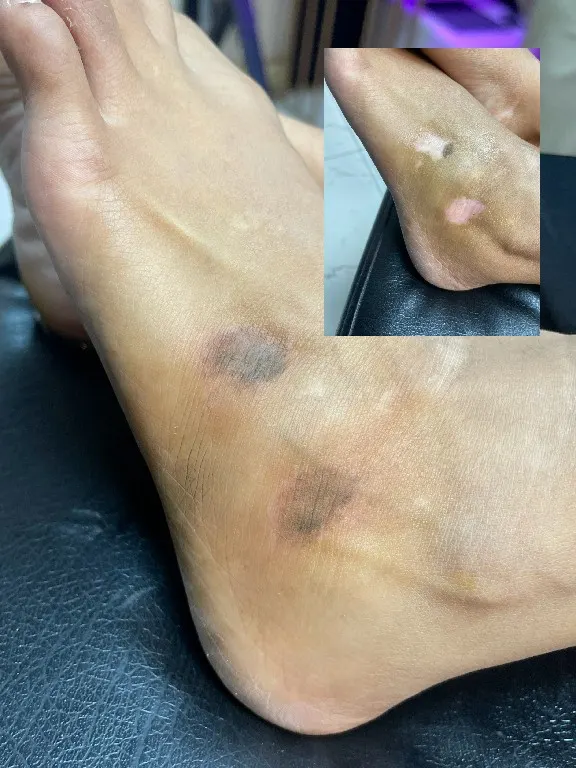
- Scalp scars, from surgery or an injury, where hair won't grow and the scar is noticeable
It works best when the hair loss is stable. If the hairline is still moving, the pigment can end up sitting on skin the hair has since retreated from, which looks out of place. The artist will ask about this in the consultation.
03 — The procedure.
SMP is rarely a one-session job. The usual path is two to three sessions, spaced a few weeks apart. The first session builds the base, later sessions add density and adjust the shape as it settles.
Each session starts with matching the pigment and marking the hairline you want, then the dots are placed in layers. Most sessions run two to three hours, depending on how much of the scalp is being covered.
The hairline is the part worth getting right. A good SMP artist draws a hairline that suits your face, not the one you had at twenty.
04 — Healing and how long it lasts.
For the first week the treated area looks darker and slightly red. That settles over the following weeks as the top layer heals, and the final colour appears around the four-week mark.
Keep the scalp out of strong sun for the first few weeks, avoid heavy sweat and friction, and don't pick at any flaking. After that, it's an area you treat almost like normal skin.
SMP fades gradually over a few years as the skin renews itself. Most people come back for a touch-up to refresh the density. That's maintenance, not a sign the work failed.
05 — Booking a consultation.
Send clear photos of your scalp from a few angles in natural light, and tell us about your hair loss: how long it's been happening and whether it's stable. That tells the artist what's achievable before you book.
Ask about the hairline they'd design for you and how many sessions they expect. A straight answer on both is the sign of a consultation worth having.