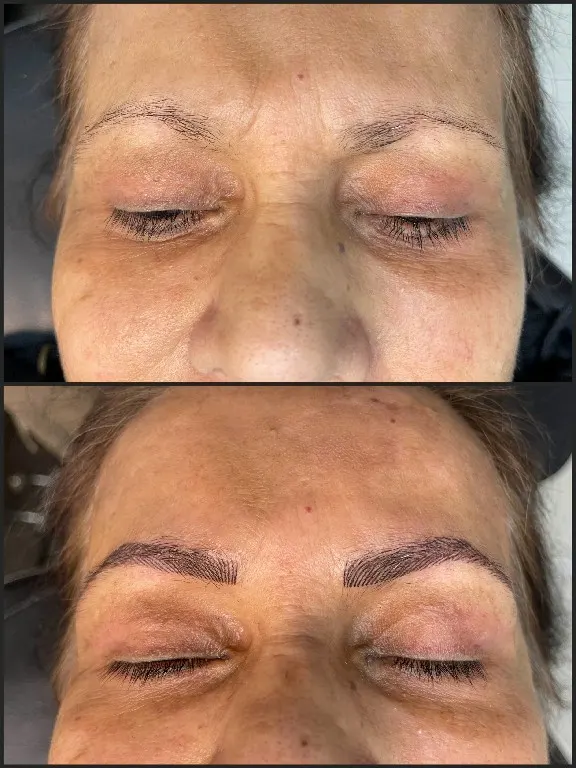
Microblading is a semi-permanent brow treatment. A hand tool with a fine blade draws hair-like strokes of pigment into the skin, one line at a time, until the brow looks full and even.
The pigment sits in the upper layer of skin, shallower than a tattoo, so it fades over a year or two. You get a defined brow without committing to anything permanent.
01 — What microblading actually is.
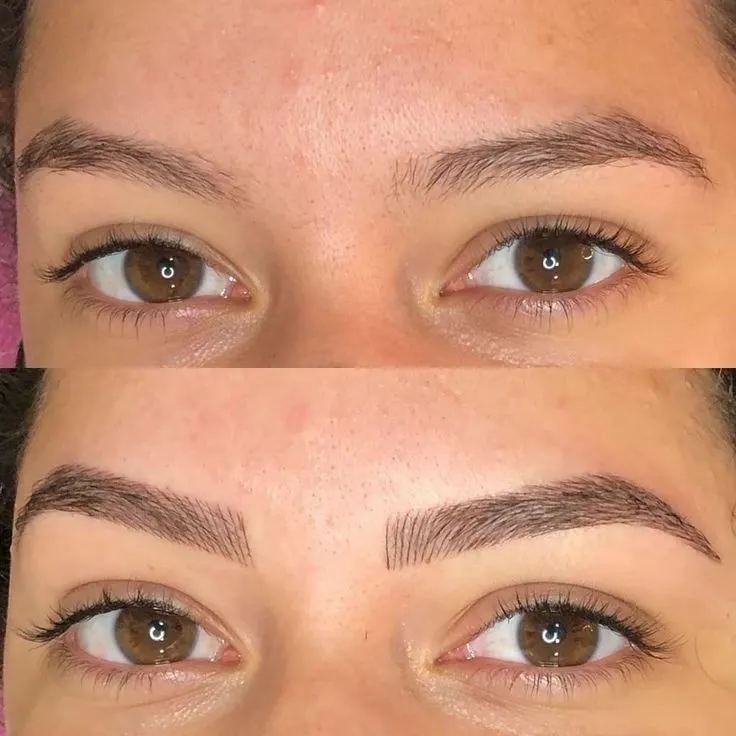
The artist holds a pen-like tool fitted with a row of fine needles. They dip it in pigment and draw individual strokes that follow the direction of your natural hairs. Each stroke is its own line, so the result reads as hair rather than a solid shape.
Microblading differs from a machine brow tattoo. A machine pushes pigment in a broader way, which gives a powdered, filled-in look. A hand blade leaves finer, crisper lines. The two suit different brows, and the artist will tell you which one fits yours.
02 — Who it's for (and who should wait).
People book microblading for a few different reasons:
- Their brows are thin or patchy and won't grow back
- They over-plucked years ago and want the shape restored
- They want a defined arch without drawing one on every day
- They want something that looks natural, not made-up
Some situations call for holding off. Active skin conditions around the brow, pregnancy, or a recent chemical peel can all mean postponing. Tell the artist about anything going on with your skin before you book. The details protect the result.
03 — The procedure, step by step.
A microblading session usually runs about two hours. It breaks down like this:
Consultation. The artist maps your face and draws a brow shape you agree on before any pigment goes in. You see the outline and can ask for changes.
Numbing. A topical numbing cream goes on so the work stays comfortable.
The strokes. The artist draws the hair strokes, checking balance as they go. This is the longest part and where the result is made.
The pigment mask. A thin layer of pigment sits on the skin for a few minutes, then comes off, revealing the new brow.
04 — Healing and aftercare.
The brows look darker for the first few days, then soften as the skin heals. A little flaking is normal. Don't pick at it.
Keep the area dry for the first week, avoid heavy sweating, and keep makeup off the brows until they've healed. Most people heal within ten days to two weeks.
The colour settles to about half its first-day intensity. That's expected, and it's why most people return for a touch-up four to six weeks later.
05 — How long it lasts.
Microblading fades over time. Most people see a year to eighteen months before the strokes soften enough to redo. Oily skin fades faster, dry skin slower, and sun exposure speeds it along.
A yearly touch-up keeps the brows crisp. Skip it and the pigment fades on its own, leaving no trace.
06 — Booking a consultation.
You don't need to know your exact brow shape before you message the studio. Tell us what you're after: fuller brows, a cleaner arch, a fix for gaps. Mention any skin concerns and send a photo of your brows as they are now.
A reference or two helps. The more the artist sees, the more useful the consultation.